Tuesday, October 25, 2011

1st Grade- Mixed Up Wild Things

We read and discussed the book “Where the Wild Things Are”, written and illustrated by Maurice Sendak.

We learned that the three primary colors- Red, Yellow, and Blue- can be mixed together to make three new colors! So, using crayons, we did just that! The new colors- Orange, Green, and Violet- are called secondary colors.

Isn't it amazing how all we need are those three colors layered together to produce all the other colors of the color spectrum?!

Our Wild Things come in many shapes and sizes but they would never eat us up! They just like to have fun.


“Let the wild rumpus start!”


Friday, October 7, 2011

4th Grade- Symmetrical Cut Paper Names

These fourth grade artworks are symmetrical. They are exactly the same on both sides.
Can you find the names hidden in them?


Tuesday, June 7, 2011

ACE Art Club- Papier Mache Animal Masks

In Kindergarten through 2nd grade ACE Art Club, we learned about the art of mask-making from many cultures and time periods. There are four main reasons that societies make masks. They are used for story-telling (plays, movies, etc.), celebrations, wars, and religion.

Our masks are animal-themed and are ideal for story-telling. Aren't they fun!


Thursday, April 7, 2011

ACE- African Paper Beads

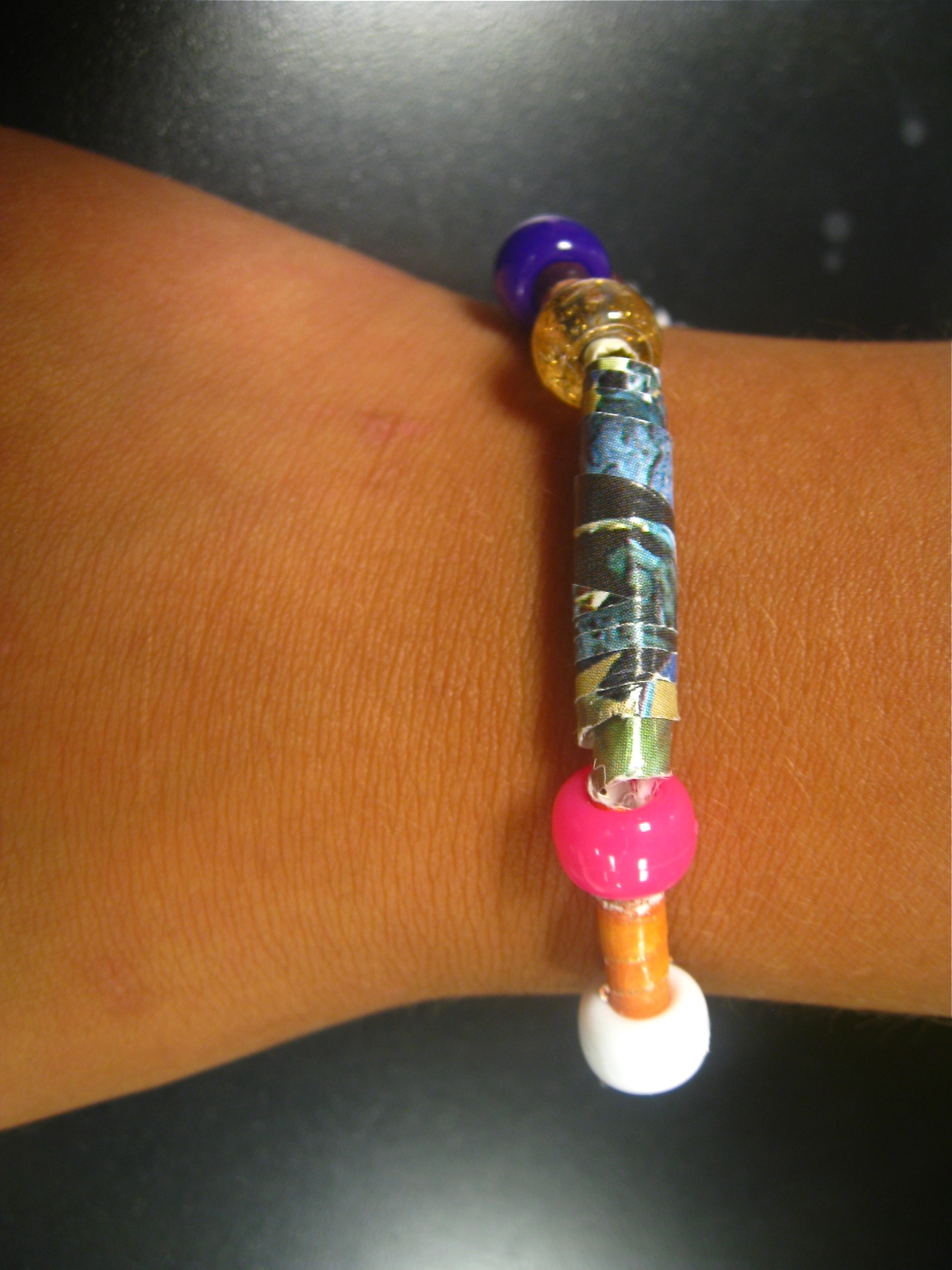
Miss Frerking will be going to Ethiopia over the summer break, and upon researching the culture of the beautiful people of Africa, she has come across these lovely paper bead necklaces made by neighbors to Ethiopia- the women of Uganda.

You can learn more about this fair-trade organization that creates sustainable opportunities for women to lift their families out of extreme poverty by connecting people worldwide in a circle of exchange that enriches everyone by clicking the photo above, or by visiting www.beadforlife.org . Oh, the power of creativity!

We were inspired by these women to try our hands at making jewelry from our own recycled paper beads.


"From what we get, we can make a living; what we give, however, makes a life." --Arthur Ashe


Tuesday, March 15, 2011

1st Grade- Japanese Kimono Weavings

"Kimono" literally means "thing to wear" in Japanese. We learned about the history and styles of traditional Japanese kimonos. Next, we made our own colorful paper kimonos by using the ancient art form of weaving.

When we weaved, we made a pattern that goes like this: over one, under one, over one, under one. As we learned in Kindergarten, a pattern repeats, repeats, repeats. So, we repeated this pattern until we finished our beautiful kimonos.

To learn more about kimonos and other cultural symbols of Japan, check out this website:


Tuesday, February 15, 2011

2nd Grade- "Tar Beach" Dreams

We read "Tar Beach" written and illustrated by Faith Ringold, and we discussed how many great things begin with a dream (for example, MLK Jr.).


In Ringold's story, Cassie Louise Lightfoor's father was a hard worker, but he was not allowed to go inside the buildings he built because of his skin color. How ridiculous!
(Click on the book for a special surprise!)
Cassie dreamed of a better future for herself and her family. In her dream, when she flew over her father's constructions, they became hers. We each chose an architectural piece that represents something special to us and drew ourselves flying over it.


Architecture is something that is built by people. Schools, homes, theme parks, and bridges are all forms of architecture.


Monday, December 20, 2010

1st Grade- Radial Symmetry Snowflakes

The weather is getting colder, and we're hoping for snow in Texas!

Like many other things in nature, snowflakes have radial symmetry, which means that they're the same all the way around. To learn more about radial symmetry check out this informative slideshow:


In first grade, we used paper and scissors to create snowflakes that are the same all the way around.

Although the each have radial symmetry, no two snowflakes are alike and neither are our artworks!